


Selecione os elementos de filtro hidráulicos por classificação de mícrons, pressão, fluxo, mídia, vedação e dimensões de conexão com esta lista de verificação B2B prática.
Introdução
Selecionar um elemento de filtro hidráulico requer mais do que combinar um número de peça ou medir o espaço dentro de uma caixa. O elemento deve proteger o sistema hidráulico no nível de limpeza exigido, permitindo o fluxo necessário, suportando pressão diferencial, e permanecendo compatível com o fluido, selos e temperatura de funcionamento.
Um filtro demasiado restritivo pode causar perda de pressão, cavitação ou bypass prematuro. Um filtro muito aberto pode permitir que partículas prejudiciais circulem através de bombas, válvulas e atuadores. A escolha certa equilibra os requisitos de proteção, fluxo, vida útil e manutenção.
Este guia fornece uma estrutura de seleção prática para elementos de filtro hidráulico. Destina-se a engenheiros de manutenção, proprietários de equipamentos e equipes de aquisição que precisam organizar informações técnicas antes de solicitar uma cotação ou revisão de substituição.
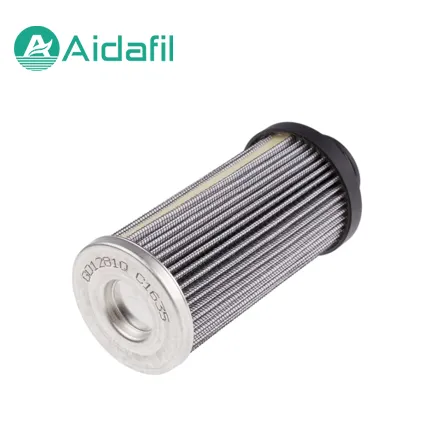
Comece com o local do filtro e a função do sistema
A primeira pergunta é onde o filtro está instalado. Um filtro de linha de pressão, filtro de linha de retorno, filtro de sucção, filtro offline e filtro de drenagem de caso vêem diferentes condições de fluxo e perfis de pressão. A mesma classificação de mícrons pode não ser adequada para cada local.
Gravar o circuito e o componente que está protegido. Uma bomba de alta pressão, servoválvula, válvula proporcional ou atuador crítico pode exigir um alvo de limpeza diferente de um circuito de retorno simples. Observe se o filtro funciona continuamente ou apenas durante parte do ciclo da máquina.
Também confirmar o tipo de fluido, temperatura de operação normal, viscosidade, e se o sistema usa óleo mineral, fluido biodegradável, glicol de água, ou outro meio. A compatibilidade de vedação e mídia deve ser verificada contra o fluido real.
Definir o alvo de limpeza necessário
Os componentes hidráulicos variam em sua sensibilidade à contaminação. O nível de limpeza-alvo deve provir da recomendação do fabricante do equipamento ou de um requisito de fiabilidade documentado. Não escolha uma classificação de filtração apenas porque é o melhor disponível.
Ao rever uma especificação de filtro, distinga entre classificações nominais e absolutas. Uma classificação nominal descreve um intervalo de filtração geral, enquanto uma classificação absoluta está ligada a um tamanho e método de ensaio definidos. Se for fornecida uma relação beta, confirmar o tamanho das partículas e o padrão de ensaio a ela associado.
Um elemento mais fino pode melhorar a remoção de partículas, mas também pode aumentar a queda de pressão e reduzir a vida útil. A seleção correta considera a taxa de geração de contaminação do sistema, queda de pressão aceitável e intervalo de manutenção.
Confirme fluxo, pressão e pressão diferencial
Registre o fluxo normal e o fluxo máximo que pode ocorrer durante a inicialização, operação de óleo frio ou condições transitórias. O elemento filtro deve manusear o fluxo necessário sem perda excessiva de pressão.
Confirm the housing pressure rating and the element's collapse or differential-pressure capability. A pressure-line element must be able to withstand the differential pressure that can develop when the element loads. A return-line element may see different conditions but still requires a suitable bypass and collapse rating.
Do not use the system's maximum pressure as the element's differential-pressure rating. These are different values. Check the product drawing and the filter assembly requirements.
Select the Filtration Media
Hydraulic filter media are available in several constructions. Each has a place depending on the application.
Cellulose Media
Cellulose media are widely used in general hydraulic filtration. They can provide efficient particle removal and are often cost-effective for routine service. Their suitability depends on the fluid, temperature, and required service life.
Synthetic Media
Synthetic media can offer a different balance of efficiency, pressure drop, and contaminant holding capacity. They may be selected when the application requires stable performance or a longer service interval. Confirm the exact media specification with the supplier.
Stainless Steel Mesh and Sintered Media
Metal media are cleanable in some applications and can be suitable for high-temperature or chemically demanding conditions. Their filtration behavior differs from disposable pleated media, so the selection should consider pore structure, cleaning method, and acceptable particle retention.
Choose the Seal Material
The seal material must be compatible with the hydraulic fluid and operating temperature. Common seal materials include NBR, FKM, EPDM, PTFE, and silicone, but the correct choice depends on the fluid and the manufacturer's recommendation.
NBR is commonly used with mineral oil, while FKM may be selected for higher temperatures or certain fluids. EPDM can be suitable for some water-based fluids but may not be compatible with mineral oil. Do not change seal material without checking compatibility.
Record whether the element uses O-rings, molded seals, end-cap seals, or a combination. A compatible filter element must seal correctly at the housing interface, not just fit the diameter.
Confirm Dimensions and Connection Details
Measure or obtain the element's height, outside diameter, inside diameter, thread, and connection style. Confirm the sealing surfaces and center-tube interface. If the element is for an existing housing, compare the new specification with the housing drawing rather than a single part number.
Check for features such as locating tabs, bypass valves, anti-drain devices, and orientation. Some filters look similar but cannot be installed in the correct direction or cannot seal against the housing.
Consider Contamination and Maintenance Conditions
The operating environment affects filter life. Dust, moisture, high temperature, cold starts, and frequent pressure cycles can change the rate at which the element loads. A filter that performs well in a clean test bench may have a short service life in a foundry, mining site, or outdoor machine.
Review the maintenance interval and the available differential-pressure indicator. If the element is difficult to access, select a configuration that allows safe and practical replacement. Consider whether the system can be isolated and whether the replacement will introduce contamination.
A Practical Selection Checklist
.Identify the filter location and protected components.
.Confirm the fluid type, viscosity, and operating temperature.
.Record flow and pressure conditions, including cold starts.
.Define the required filtration rating and cleanliness target.
.Select a suitable media construction.
.Confirm seal compatibility.
.Check height, diameters, thread, and sealing interface.
.Verify collapse pressure, bypass arrangement, and differential-pressure limits.
.Review maintenance access and replacement interval.
.Confirm the final data with a supplier or equipment drawing.
Common Selection Mistakes
A frequent mistake is selecting by outer dimensions alone. Another is treating a nominal micron rating as if it were an absolute rating. Some buyers also forget that the filter element, not just the housing, must withstand the differential pressure generated during loading.
Mixing seal materials without checking fluid compatibility can cause swelling, hardening, or leakage. Using a filter with the wrong collapse rating can lead to media damage and uncontrolled bypass. Finally, comparing products only by price can hide differences in media area, efficiency, and service life.


