


Combine um purificador de óleo de vácuo com viscosidade do óleo, teor de água, vazão e limpeza necessária antes de solicitar uma cotação.
Introdução
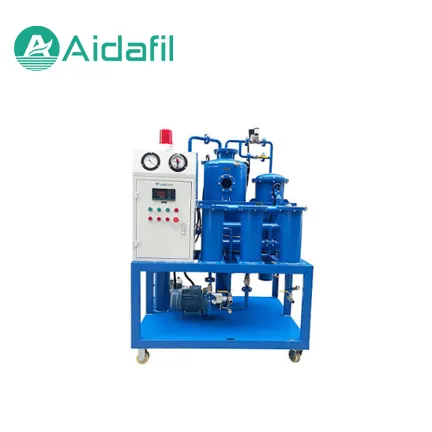
O equipamento de purificação de óleo é usado para remover a contaminação de água, gás e partículas da lubrificação, hidráulica, transformador, turbina e outros óleos industriais. O tamanho e configuração corretos da máquina dependem do próprio óleo, da contaminação presente, do nível de limpeza necessário e do tempo disponível para o tratamento.
Um purificador muito pequeno pode não atingir o resultado necessário dentro da janela de manutenção disponível. Uma máquina muito grande pode aumentar o custo e o uso de energia sem melhorar o processo. A seleção correta começa com uma amostra de óleo e um objetivo de tratamento claro.
Este guia explica os principais dados necessários para selecionar um purificador de óleo, como pensar sobre o fluxo e o tempo de lote, e quais perguntas de configuração devem ser confirmadas antes de solicitar uma cotação.
Comece com o tipo de óleo
Diferentes óleos têm viscosidade, aditivos, comportamento de oxidação e sensibilidade ao calor. Registre o nome do produto do óleo, grau de viscosidade ISO ou viscosidade a uma temperatura especificada e a aplicação. Óleo hidráulico mineral, óleo de compressor, óleo de turbina, óleo de transformador e lubrificantes sintéticos podem exigir diferentes condições de tratamento.
Não selecione o equipamento usando apenas o nome do óleo. Peça a ficha técnica e, sempre que possível, uma análise do óleo corrente. Confirme a temperatura normal de funcionamento do óleo e a temperatura em que será processado.
Reveja a Análise do Petróleo
Uma análise de óleo ajuda a identificar quais contaminantes precisam ser removidos. Os resultados típicos podem incluir teor de água, contagem de partículas, viscosidade, acidez, oxidação, ponto de inflamação e resistência dielétrica. Para o óleo transformador, a resistência dielétrica e a umidade são especialmente importantes.
O objectivo de tratamento deve ser claramente indicado. Exemplos incluem reduzir a água livre, remover a água dissolvida para um nível alvo, melhorar a limpeza de partículas ou restaurar as propriedades dielétricas. Alvos diferentes podem exigir diferentes estágios de vácuo, aquecimento, coalescimento e filtração.
Se o óleo contiver um nível elevado de água, água emulsionada ou gás dissolvido, um filtro de partículas simples pode não ser suficiente. Pode ser necessário desgaseificação a vácuo e desidratação. Se a contaminação for principalmente partículas, uma fase de filtração adequada pode ser o principal requisito.
Calculate the Required Flow Rate
Flow rate is not only the machine's nominal capacity. It must be considered together with the volume of oil to be treated and the available processing time.
A practical starting calculation is:
Required flow rate = oil volume to be processed ÷ effective processing time
This is only an estimate. The actual result depends on the initial contamination, target cleanliness, oil viscosity, temperature, vacuum performance, and the number of passes required. For critical equipment, the manufacturer or process engineer should confirm the treatment time.
Consider whether the purifier will operate continuously while the equipment is running or as a batch process during a shutdown. A continuous bypass installation may require a lower flow rate than a batch treatment that must finish within a short maintenance window.
Select the Treatment Stages
An oil purifier may combine several stages:
Coarse filtration for large particles
Heating to reduce viscosity and support dehydration
Vacuum dehydration and degassing
Coalescing or separation for free water
Fine filtration for particulate removal
Optional polishing or adsorption stages
The stages should be selected according to the oil condition and the required result. Adding a stage that is not needed increases complexity and cost. Removing a necessary stage may prevent the machine from reaching the target.
Consider Oil Viscosity and Temperature
Higher-viscosity oil is more difficult to pump and process. Heating may be required, but the maximum temperature must remain within the oil and system limits. Confirm the heater capacity, temperature control, and safety interlocks.
Check the oil's flash point and the supplier's recommended processing temperature. Do not assume that higher temperature always produces a better result. Excessive heat can accelerate oxidation or degrade additives.
Check the Configuration and Installation Requirements
The machine should suit the available space, connections, power supply, and maintenance access. Consider:
Inlet and outlet connection sizes
Mobile or stationary configuration
Flow and pressure requirements
Heater and vacuum pump power
Local voltage and frequency
Required protection for the operating environment
Availability of hoses, valves, and sampling points
Waste-water or gas handling
Operator training and maintenance access
If the purifier will be used in a hazardous area, confirm the required electrical protection with the site engineer. Do not select a standard configuration without reviewing the installation environment.
Define the Acceptance Check
Before delivery or after commissioning, define how performance will be checked. A practical acceptance process may include:
28.Record the initial oil analysis.
29.Record the volume and temperature of the oil.
30.Run the agreed treatment cycle.
31.Sample the oil after the cycle.
32.Compare the result with the agreed target.
33.Record flow, vacuum, temperature, and pressure.
34.Confirm that no leaks or abnormal noise are present.
The test should use representative oil and realistic operating conditions. A bench test with clean oil does not prove that the machine will remove water or gas from the actual process oil.
Common Selection Mistakes
One common mistake is selecting by tank volume alone without considering the required cleanliness and available time. Another is assuming that a particulate filter will remove dissolved water. Some buyers compare only nominal flow rates and ignore viscosity, vacuum, and temperature.
Another risk is treating transformer oil with a machine that is not configured for the required dielectric performance. For critical oils, the treatment target and acceptance test should be agreed before purchase.


