Compare fios de cunha e filtros de malha sinterizados por retenção de partículas, resistência, limpeza, queda de pressão e condições de processo.
Introdução
Fio de cunha e malha sinterizada são ambas construções de filtro metálico, mas comportam-se de forma diferente em serviço. Usa-se uma ferida de arame perfilada ou soldada em uma tela entalhada. O outro usa camadas de malha metálica ou fibra metálica para criar uma estrutura de filtração porosa.
A escolha entre eles não deve basear-se apenas no material. Depende do tamanho das partículas a serem removidas, do diferencial de pressão, do método de limpeza, do fluido, da temperatura e das cargas mecânicas do elemento.
Este guia compara as duas construções e fornece um processo de seleção prático para aplicações de filtração industrial. Pretende-se como uma visão técnica inicial; a especificação final deve ser confirmada com o fornecedor do filtro e os requisitos do equipamento.
Como os filtros de fio de ponta são construídos
Um filtro de fio de cunha usa fios perfilados dispostos em torno de barras de apoio ou uma moldura. O perfil do fio cria um slot contínuo com um caminho de fluxo relativamente aberto. A largura do slot é uma especificação chave porque controla o tamanho nominal das partículas que podem passar pela tela.
As telas de arame de fio de fio de fio são frequentemente usadas para filtração grossa a média, lavagem de costas, desaguamento e aplicações onde a resistência mecânica e uma área de fluxo aberto são importantes. A superfície exterior lisa pode ajudar na limpeza em alguns projetos.
O desempenho real depende da largura da fenda, perfil do fio, estrutura de suporte, direção do fluxo e da forma como o elemento é montado. Uma tela de fio de cunha não é intercambiável com uma malha tecida ou elemento sinterizado simplesmente porque ambos são feitos de aço inoxidável.
Como os filtros de rede sinterizados são construídos
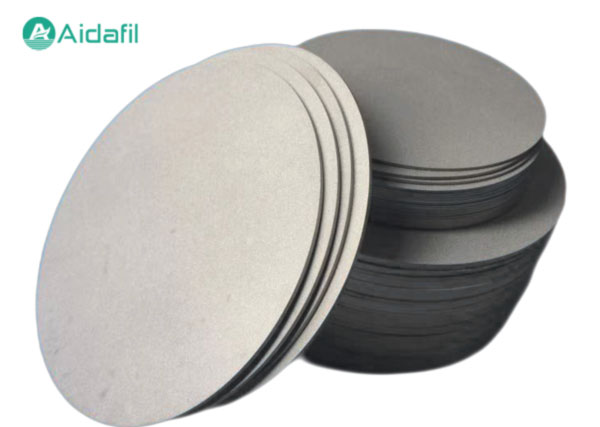
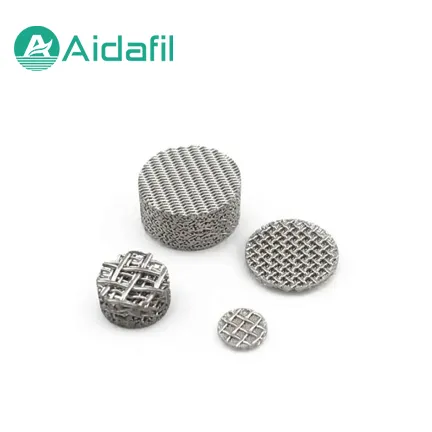
Os filtros de malha sinterizada são feitos pela ligação de uma ou mais camadas de malha metálica ou fibra metálica. O processo de sinterização cria uma estrutura porosa fixa com um tamanho de poro controlado e uma estabilidade mecânica melhorada em comparação com uma malha tecida solta.
Os filtros sinterizados podem ser projetados para retenção de partículas mais finas e podem fornecer uma grande área de filtração em um elemento compacto. A estrutura pode incluir uma camada protetora, uma camada de filtração e camadas de suporte. A construção exata deve ser confirmada a partir do desenho do produto.
Os meios metálicos sinterizados são usados em aplicações de alta temperatura, alta pressão, viscosas ou quimicamente exigentes, onde um filtro metálico limpo pode ser adequado. A limpeza e regeneração devem corresponder ao contaminante e à estrutura dos poros.
Comparação num Glance
Propriedade | Fio de Cunha | Mistura sinterizada |
Mecanismo de filtração | Controlled slot between profiled wires | Fixed porous metal structure |
Typical retention range | Often coarser, depending on slot width | Can support finer filtration depending on construction |
Flow area | Generally open, with a defined slot pattern | Depends on mesh layers and pore size |
Força mecânica | Good structural strength when correctly supported | High when designed with suitable support layers |
Cleanability | Often suitable for backwashing or mechanical cleaning | Cleanable in some designs, but cleaning must suit the pore structure |
Pressure drop | Depends on slot width, flow area, and flow direction | Depends on pore size, media construction, and flow rate |
Best starting point | Coarse screening, separation, backwash, open-flow applications | Fine metal filtration, high-temperature or demanding process conditions |
The table is qualitative. It cannot replace a pressure-drop calculation, particle-retention review, or compatibility check for a specific process.
Compare Particle Retention Requirements
Start with the smallest particle that must be retained and the acceptable pressure drop. A wedge wire screen is often considered when the required slot is relatively open and the main goal is to retain larger solids while maintaining flow. A sintered element may be considered when finer filtration is required and the process can accept the associated pressure drop and cleaning requirements.
Do not compare only the nominal micron number. Ask how the rating was determined and whether it is a nominal or absolute value. The shape of the particles and the flow direction can affect the result.
Evaluate Mechanical and Pressure Conditions
Both constructions can be strong, but the support structure matters. Check the differential pressure across the element, the maximum pressure, the temperature, and any vibration or mechanical load. A filter that is strong in one direction may not be suitable if the flow can reverse or if the element is cleaned by high-pressure backflow.
Confirm the housing support and the sealing arrangement. A metal element may be durable, but a damaged seal or unsupported end cap can still allow bypass.
Consider Cleaning and Maintenance
Wedge wire screens are often selected where the process allows backwashing or mechanical cleaning. The open slot structure can release some contaminants more easily than a fine porous medium, but the result depends on the contaminant and the cleaning procedure.
Sintered elements can be cleaned in suitable applications, but the cleaning method must not damage the bonded structure or leave contamination trapped in the pores. Verify the recommended cleaning agent, temperature, pressure, and drying procedure with the supplier.
If cleaning is difficult or the contaminant cannot be removed reliably, a disposable or replaceable element may be a better service choice. The lowest purchase price is not the lowest lifecycle cost if the element cannot be cleaned effectively.
Review the Process Fluid and Temperature
Check corrosion resistance, temperature range, and compatibility with the fluid. Stainless steel grades are not equally suitable for every chemical environment. If the process contains chlorides, aggressive additives, or high-temperature oxidation, confirm the material with the supplier.
Also consider gasket and seal materials. The metal filter may be suitable for a high-temperature process, while the seal is not. The complete assembly must be reviewed.
Common Applications to Discuss with a Supplier
Typical questions include:
· Is the filter used for water, oil, gas, solvent, polymer, or another fluid?
· Is the main requirement coarse screening or fine particle removal?
· What is the normal and maximum pressure drop?
· Will the element be backwashed, chemically cleaned, or replaced?
· What are the temperature and corrosion conditions?
· What connection, diameter, length, and sealing arrangement are required?
These details make the difference between a general material comparison and a usable filter specification.
Common Selection Mistakes
One mistake is assuming that a finer filter is always better. A finer element may increase pressure drop, shorten service life, or become difficult to clean. Another is selecting a metal filter because it is reusable without checking whether the contaminant can actually be removed.
Teams sometimes compare a wedge wire slot size with a sintered mesh micron rating as if the numbers had the same meaning. The test method and filtration mechanism may differ. Finally, ignoring the seal, support, and housing interface can lead to a filter that appears to fit but does not perform reliably.